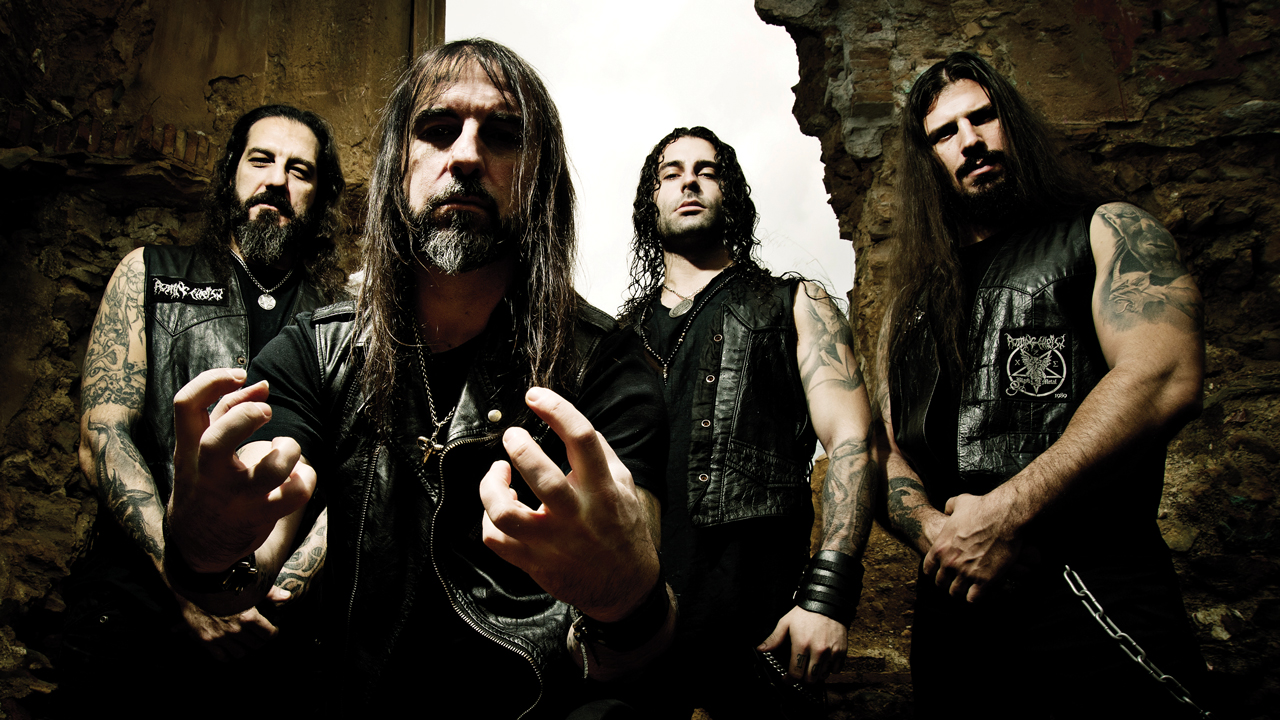

Paradise Lost is a British doom metal band formed in Halifax, England, in 1988. The band consists of founding members vocalist Nick Holmes, guitarists Greg Mackintosh and Aaron Aedy, as well as bassist Steve Edmondson, with current drummer Waltteri Väyrynen (Bodom After Midnight, Abhorrence), who joined in 2016. The band has gone through many different stylistic changes throughout their 30+ year career.

#16 – Host (1999)
Evolving on from the softer edge of their prior record, One Second, Nick Holmes and company abandoned the guitars in favour of dialling up synths and electronics. It’s a shift which, while jarring at first, ultimately comes across as a solid album, albeit one that shares much more in common with Depeche Mode, New Order, and Duran Duran than anything in the rock or metal scene. For what it’s worth, I really do love this album for what it is, and spin it frequently to this day when I’m in the mood for something mellow and morose. With songs like It’s Too Late, Last Day of Summer, So Much is Lost and Permanent Solution on the track list, it’s worth checking out at least once to make your own mind up.
#15 – Believe in Nothing (2001)
A very similar album in tone and approach to Host, but one that brought back guitars, however minor a role that they play in the mix. This album tends to get unfairly bashed by critics in a way that I have never really understood. It sounds to me like the perfect and logical evolution of what started in One Second and Host with a little more structure. Some songs here are well worth listening to, and Nick Holmes’ soaring singing voice in the choruses of tracks like I Am Nothing, World Pretender, and Fader are worth the price of admission alone. Believe in Nothing tries some new things, not all of it works, but it’s a pleasant ride all the same.


#14 – Symbol of Life
Completing a trilogy of electronic/gothic rock albums, Symbol of Life takes what worked in their prior two entries and runs with it. There’s more of a guitar presence here, more so than Believe in Nothing, and overall, a greater sense of ferocity that was lacking on everything passed Draconian Times up to now. Coupled with the cleaner production and some genuine guitar riffs and bass lines at last, this album comes full circle in the experimentation period and does enough right to edge it up on the others that were released around the same time. One listen to Primal or Channel For The Pain will tell you everything you need to know.
#13 – One Second (1997)
The band had a lot of guts to change up as drastically as they did when writing and releasing their follow-up to 1995’s Draconian Times, and that should be commended. Gone was Nick’s gruff metal bark, and absent were Greg’s emotive lead lines and solos. Instead, One Second shifted and leaned fully into gothic rock territory. Synths were present in Paradise Lost’s music before, but now they were the main focus. This change was controversial at the time, but now, when looking back, I think that this album has rightfully earned its place in history as one of the best in goth rock. There are some really great tracks on offer too: the title track is an obvious highlight, though Say Just Words is a live staple for a reason, with Another Day, Mercy, and Soul Courageous being no slouches either.


#12 – Paradise Lost (2005)
The first of many bold claims on this list, arguably if you don’t count how low I’ve decided to rank One Second. Regardless, on their tenth studio album, the band went back to the drawing board and attempted to redefine exactly who and what Paradise Lost was. The result? A record that keeps the emphasis on melody and catchy hooks from albums like One Second and Believe In Nothing, whilst Nick’s barking metal vocals are once again in full force, a full decade after they were last heard on Draconian Times. Synths are still here, but the guitars once again sounded dirty and heavy. There were no mistakes that this was a metal album through and through. Close Your Eyes and Sun Fading can attest to that. A great blend.
#11 – Tragic Idol (2012)
It’s a tough call ranking everything from this point on, as every album on this list I love in almost equal measure. Tragic Idol largely carried on from the groundwork laid by the two albums that came before it: In Requiem and Faith Divides Us, Death Unites Us, but fails to do anything to surpass what could be found on those records. Tragic Idol is instead a refinement on some great atmosphere and stellar songwriting, which doesn’t bring all too much new to the table. Standout songs from this one include: In This We Dwell, The Glorious End, and the mammoth that is Fear of Impending Hell.


#10 – In Requiem (2007)
Finally! This is what I was expecting to hear from a modern Paradise Lost album in the 2000s. Here were the hallmarks of everything that made Paradise Lost as special as they were in the decade prior, with the benefit of better production and a broader soundscape. This album was very atmospheric and moody, much like Shades of God and Icon, but still retained the synths, pianos, and melodic chorus hooks of the 2000s output by the band, all wrapped up in a slick 45-minute package. Is it perfect? No. However, In Requiem was the return to form that fans, myself included, were expecting when the band began to get experimental at the turn of the decade. Ash & Debris, The Enemy, and Your Own Reality can attest to it. Gothic and doom in equal measure. A lot to love.
#9 – Faith Divides Us, Death Unites Us (2009)
I take no pleasure in ranking this gem as low as it is on this list; if anything, it’s a testament to just how strong these next few records are. Boasting a gorgeous level of production and the best title track in the band’s history, Faith Divides is a savagely instrumentally heavy record that punches up the aggression far beyond anything that had been heard from the band since Draconian Times. Living with Scars is one of Paradise Lost’s heaviest tracks in decades, with striking pinch harmonics squealing in the intro riff and chorus, and a thick chugging rhythm throughout. Rise of Denial is equally punchy, too; there are many strong contenders to the gothic/doom crown on this record that make you want to give yourself whiplash from how hard your head sways, not to mention the pure sludge of Universal Dream. Hard to go wrong with this one.


#8 – Lost Paradise (1990)
When the topic of early Paradise Lost records is brought up, I seldom hear anyone mention their debut record, and that’s a shame. As with any proto-genre album of this type, there are certainly certain teething problems, with holds Lost Paradise back from true greatness, but it’s a masterpiece of slow, old school death metal grinding all the same. This concept was nothing new; arguably, what was going on from other acts at the time, such as Obituary and Death, was of a similar vein, but Paradise Lost managed to strike that core balance of death metal’s heft and doom metal’s oppressive atmosphere. Performances are solid across the board, too, the first instance of Nick’s growl that wouldn’t return for decades. Standouts include: Our Saviour, Paradise Lost, Rotten Misery, and Internal Torment II.
#6 – Ascension (2025)
The latest Paradise Lost record at the time of updating has a lot going for it, after the lengthy gap that preceded Obsidian (and the revival project Host). The band’s 17th record is a celebration of its various eras, particularly standing out with must-listen tracks like Serpent on the Cross and Savage Days. It also sees the rare reintroduction of acoustic guitar in Lay a Wreath Upon the World, and the Medusa-tinged Silence like the Grave. I’m also obsessed with the chorus on Tyrants Serenade, being one of the catchiest Paradise Lost songs of all time. It’s an album that front-loads its best songs, but the overall package is well worth engaging with for the 50-or-so-minute runtime.


#5 – Medusa (2017)
I fucking love this record. To be completely honest, I love all of these albums in almost equal measure. Medusa built upon the blueprint of The Plague Within, with clean vocals taking a backseat to Nick Holmes’ aged growl once again, and all the better for it. Medusa was the band coming full circle to the days of Lost Paradise and Gothic, which had also evolved the structure of death/doom tenfold in the nearly thirty-year gap. This was a record that showed the band in top form, and is incredibly strong with songs such as From The Gallows, Gods of Ancient, Until the Grave, and No Passage for the Dead, demonstrating that some of Greg’s work in Vallenfyre had rubbed off in equal measure on Nick’s role in Bloodbath. Immeasurably heavy. Unapologetically doom.
#4 – Draconian Times (1995)
Yeah, you read that right. I really have ranked Draconian Times, the landmark gothic metal masterpiece, this low in their discography. Here me out. As with Medusa and Death Unites, I really do love this album, and its legacy is a large reason as to why I’ve put it this highly, but in comparison to Shades of God and Gothic, I feel that the axe is a little more dull, if you know what I’m saying. Draconian Times is a very catchy album, with melodies and rich chorus lines throughout. Nick’s shouty Hetfield impression is also at its peak here, and fits the tone perfectly. Make no mistake, this isn’t a soft record, but it is more accessible than all that came before. This is a gothic metal record through and through, very little death remains, and that’s okay. Spin Once Solumn, Shadowkings, and I See Your Face for a solid taste of what this record has to offer. It rules.


#3 – The Plague Within (2015)
With the news that Nick was replacing Peter Tägtgren as vocalist for Bloodbath in 2013, expectations were high for not only what Old Nick could do for the death metal Swedes, but also what impact that would have on the future of Paradise Lost. The result? One of their best records, ever. Arguably, for the first time since their debut effort in 1990, the band had embraced their death metal roots for a record that defied all expectations. Sure, Death Divides Us and Tragic Idol were great albums, but THIS was something else. Without question, one of, if not THE darkest albums in their discography, The Plague Within represents all things death/doom to me, and for good reason. It’s a fucking masterpiece. Need convincing? Listen to Beneath Broken Earth, Punishment Through Time, or Terminal and get back to me, I’ll be waiting.
#4 – Obsidian (2020)
Catering to fans of every era of the band, well, maybe not Host, Obsidian gracefully transcends conventions of death/doom, while also genre-melding gothic and alternative metal. The intro track Darker Thoughts starts with a stunning acoustic piece, before the muscle of the guitars and growls breaks out. For fans of Medusa and The Plague Within, you’ll be right at home with The Devil Embraced, Fall From Grace, Ghosts, and Ravenghast does the heavy lifting, where Ending Days, Hope Dies Young, and Forsaken take cues from their mid-2000s output. It’s something very special, and I’m happy that, amidst all this in 2020, we get such a powerful record to indulge ourselves in.


#3 – Icon (1993)
Take everything that I said about Draconian Times, double it, and apply it to Icon. It’s hard to believe that Paradise Lost’s trilogy of gothic metal records all came out a year apart from each other, with Icon being the last before Draconian Times in 1995. What we have in Icon is a confident and melodic metal soundscape that features some of the best choruses and guitar solos in the band’s history. Difficult to go wrong with any of these songs, and these final three records to rank on this last are largely interchangeable at this point. What can I say that hasn’t already been said better by someone else in the past 30 years since this dropped? I recommend Embers Fire, Dying Freedom, Joys of Emptiness, and Widow.
#2 – Shades of God (1992)
The levels of imagination and experimentation on this album are spellbinding. The World Made Flesh, for example, has more to do with Slayer’s Seasons in the Abyss than the works of Hypocrisy. Slow and hypnotic lead progressions marry gorgeously with the gloomy feel that leaks out of every fibre of this glorious affront to humanity. The screaming lead that begins Crying For Eternity echoes the pain of mortality just as masterfully as the sludgy doom riffs that follow. As I Die is a seminal work for the band for a very good reason. Emotionally charged and just as resonant sonically. Even something like Iron Maiden’s galloping guitars is replicated morbidly on this release with Daylight Thorn. What more can really be stated? It’s a milestone for a reason.


#1 – Gothic (1991)
Be honest, did you expect anything else to top the list? For any record that innovates on death metal, think Skydancer or Lunar Strain, for instance, it can be hard to get everything right on the first go. If Lost Paradise was the band’s pre-emptive strike, then Gothic was their killing blow. Every bit as heavy as their debut album, Nick’s growl is still as powerful, but the instrumentals have moved away from the likes of old-school death metal and transitioned into something far more macabre and sinister. I feel like with these last few entries that I’m just stating the obvious over and over again, so I’ll let the music do the talking. If you somehow haven’t spun this yet. Here’s your place to start: Shattered, Falling Forever, Dead Emotion, and Rapture.
FAQs
In the loosest possible definition of the genre, yes. Paradise Lost helped to pioneer gothic metal, particularly sub-genres like death/doom. However, it’s not a goth band in the same vein as Sisters of Mercy or Type O Negative.
Nick Holmes is the frontman of Paradise Lost and has been since the band’s inception in 1988.
Yes, Paradise Lost are among the most popular bands of their genre, and are a well-known metal band with a good reputation.