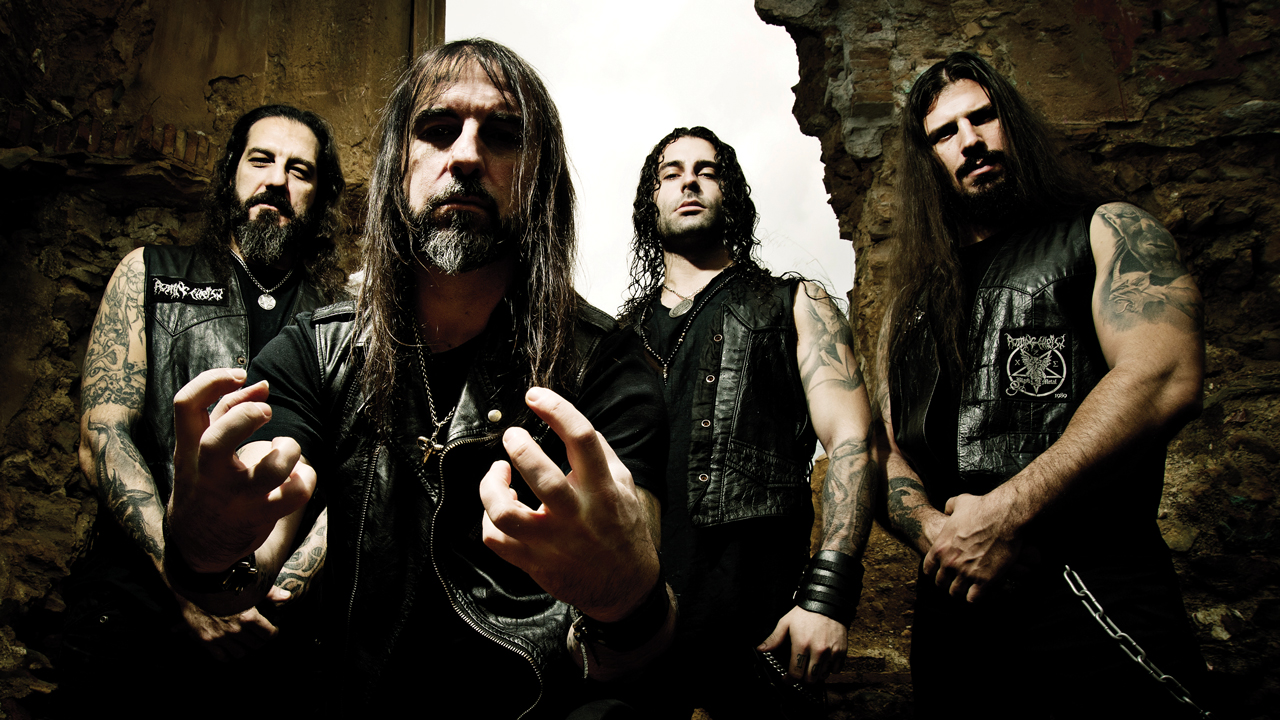

Behemoth is a Polish extreme metal band from Gdańsk, Poland. It’s led by frontman, guitarist, and vocalist Nergal, drummer Inferno, and bassist Orion. For over 30 years, the troop has been creating some of the most commercially successful blackened death metal, with a few stumbles along the way. This is Kyusai Music’s ranking of their entire discography, as of 2026.
#13 I Loved You at Your Darkest (2018)

I have complicated feelings about I Loved You at Your Darkest. I was there at its launch, I met Nergal and company, and even have a tattoo on my right wrist of the triple cross from before the record dropped. With that preface out of the way, it pains me to say that this album isn’t very good, and represented a turning point for the band that it still hasn’t fully recovered from yet.
A children’s choir, blues-tinged guitar tone, big poppy choruses, and more simplistic songwriting are pretty challenging to hear from the band that gave us masterpieces of the black and death metal genres. There are some solid tracks, the awfully-named God = Dog and Wolves ov Siberia come to mind, but so much of the middle and back-end of this disc is a slog. After nearly a decade, I’m comfortable admitting this is where Behemoth lost its way.
#12 Opvs Contra Natvram (2022)

If I Loved You at Your Darkest was a misstep, then Opvs Contra Natvram is a notable (if safe) improvement. There are some solid songs here, such as Once Upon a Pale Horse or Thy Becoming Eternal, leaning more into the black metal origins of the band. However, it rarely challenges the listener, being fairly predictable and bland as a consequence.
The pop choruses are back, unfortunately, as heard on The Deathless Sun, with a fair amount of filler songs (Ov My Herculean Exile and Neo-Spartacvs), for an otherwise lean 40-minute runtime. Far from poor, but hard to get angry or excited about. Hearing these songs live doesn’t give them life either. It’s a fairly forgettable (but not regrettable) record.
#11 Thelema. 6 (2000)

You certainly can’t deny the sheer level of crushing brutality on display with this album. Thelema. 6 follows directly after Satanica (more on that later), and that release is both this one’s gift and curse. On one hand, Behemoth were now a fully-fledged death metal band and finally made the transition properly, and on the other, this album followed their big experimental underground hit, with less staying power.
#10 Pandemonic Incantations (1998)

Pandemonic Incantations is a great black metal album through and through. The aggression is there, and it is harsh as anything that had preceded it, also featuring Nergal’s most diverse and experimental guitar work up to that point. Why so low down then? While it is great, of their entire main catalogue, I find it to be the least memorable, and as a result, its lack of impression delegates near the bottom of the list.
#9 The Shit Ov God (2025)

Juvenile name and fairly weak title track aside, The Shit Ov God is a resounding improvement in Behemoth’s recent discography. While this lean eight-track record (clocking in at less than 40 minutes) largely returns to the status quo, straightforward blackened death metal with still (fairly) clean production.
Standouts from the newest record include The Shadow Elite, Sowing Salt, and Lvciferaeon, but the whole eight-track affair is worth spinning. It lacks the staying power of older Behemoth albums, hence its low placement, but it would be amiss of me not to give Nergal and company their due for trying to return to what worked in the pre-The Satanist era before going too far off the road. Good try, boys.
#8 – Grom (1996)

It’s an old-school album born from admiration for the second wave of black metal, and for that, it should be commended. Grom is a great listen from front to back. The reason it does not rank any higher than this is merely that it’s just more old-school black metal-era Behemoth, which was preceded by such classics as demo tapes, Return of the Northern Moon, and the Iconic … From the Pagan Vastlands. Grom lacks that genre-defining dark magic.
#7 – Satanica (1999)

The biggest leap for Behemoth since their initial debut, Satanica was the bold forward step that dragged the band out of the shadows of second wave black metal and into defining the blackened death metal approach that they would go on to revolutionise. Songs such as Starspawn, Decade of Therion, and Chant for Eschaton 2000 cemented their new, brutally crushing identity. The riffs were heavier, Nergal’s voice was much deeper and more akin to that of Cannibal Corpse’s Chris Barnes, and overall it was a game-changer.
#6 – Sventevith (Storming Near the Baltic) (1995)

Behemoth’s first album may be far removed from the band they became throughout the years, yet Sventevith has a timeless appeal that will continue to age gracefully. Instead of the brutal instrumentals and violent lyrics of latter records, their first album was much more atmospheric and focused lyrically on Paganism and Polish history. It’s a welcome and refreshing change, and to some is regarded as the best from the band. Suffers from the same crutch as Grom still, they had better black metal releases before their albums.
#5 – Zos Kia Cultus (Here and Beyond) (2002)

This album, succeeding Thelema 6, is exactly what a follow-up to Satanica should have been from the start. Zos Kia Cultus is vile. Nergal’s voice was even deeper and more guttural than had previously been heard, their guitar and bass tone was viciously bass-heavy, and the production was leagues above anything that came before. For the first time, Behemoth demonstrated a truly punishing and overbearing sound, thanks in part to some of the most aggressive drumming ever recorded. Songs like As Above So Below, No Sympathy for Fools, and Horns ov Baphomet reigned in that the new death metal sound was here to stay.
#4 – Evangelion (2009)

A comfortable blackened death metal release following a successful streak of solid albums, Evangelion, to some, was too safe to innovate as prior titles had. It’s true; this album does not innovate, but it refines a formula to a mirror shine and is flawlessly produced. The album follows masterfully and features, up to that point, the most technical and groove-heavy guitar and bass work yet. Daimonos is a monolithic opening track that pelts listeners with Nergal’s powerful vocals and Orion’s best drumming yet. The Seed Ov I tells a story of a man becoming a God, and let’s just say there’s a very good reason why Ov Fire and the Void continues to close live shows to this day, it’s just that good.
#3 – The Satanist (2014)

Behemoth’s most recent album is a game-changer not only for the depth of musical composition but for the story behind it. This was both Behemoth’s comeback after an almost five-year absence, but also Nergal’s triumphant victory over his battle with Leukaemia. His battle with cancer is reflected in the vulnerability of the lyrics on display, especially noticeable in the title track and the songs In the Absence ov Light and the album closer O Father O Satan O Sun. It’s a little slower than prior albums, but it’s still aggressive and powerful, and more mature and artistic overall. A beast of a different class.
#2 – The Apostasy (2007)

This album was fearsome and reflected everything that Behemoth had learned from their death metal releases (excluding one, but we’ll get to that) and filed it all down to a razor-sharp fine point. At the Left Hand ov God, Slaying the Prophets of Isa, Be Without Fear, and Christgrinding Avenue all display Nergal’s otherworldly growl and the constant onslaught from Orion and Inferno as the entire trio decimates with fast, heavy death metal. It’s not their most technical, but it’s about the groove of the music, and its entrancing level of violence is enthralling beginning to end.
#1 – Demigod (2004)

Take the brutality of Zos Kia Cultus and The Apostasy and combine it with the craftsmanship and refinements of Evangelion and The Satanist, and you get Demigod. It truly is brutality perfected and managed to balance the chaotic death metal riffing with Nergal’s inhuman demonic growl in a way that has not quite been heard before or since. This was the time when the band was experimenting with foreign instruments such as sitars and other Eastern cultural strings to craft a sound that all culminates together into an immeasurable experience of grandiose proportions, where Behemoth truly lived up to their namesake.
FAQs
A Behemoth is defined as something large, powerful, and hard to manage. It was the second name Nergal chose after its original moniker of Baphomet.
Behemoth is a blackened death metal band or black/death band. However, it’s flirted with both genres heavily over the years. Earlier albums are straightforward black metal, and some of its mid-era releases heavily lean on the death metal aspects.
It’s no secret that Behemoth uses Satanic imagery and lyricism in their music and live performances to a point where they can be considered Satanic. Whether these are core beliefs of the band members or purely for marketing remains unconfirmed. Frontman Nergal identifies as a Satanist.